Circadian Rhythm Automation: The Definitive Guide to Biological Lighting
Circadian rhythm automation the modern interior environment is increasingly defined by its detachment from the natural world. As urbanization pulls the human experience toward climate-controlled, windowless, or perpetually lit spaces, the biological disconnect between our internal clocks and the solar cycle has reached a critical threshold. This systemic misalignment—often referred to as social jetlag or circadian disruption—is no longer a fringe concern of chronobiologists; it has become a central challenge in architectural design, public health, and smart home engineering.
The emergence of circadian rhythm automation represents a sophisticated technological response to this biological crisis. Rather than treating light simply as a utility for visibility, this field treats light as a potent bioactive drug. By automating the spectral composition, intensity, and timing of artificial illumination, engineers and homeowners are attempting to re-sync the human endocrine system with a digital approximation of the sun’s movement. This is not merely about changing the color of a lightbulb; it is about the programmatic management of hormonal triggers that govern sleep, alertness, and metabolic health.
However, the transition from manual lighting to fully automated biological synchronization is fraught with technical and physiological complexity. The efficacy of these systems depends on a nuanced understanding of “non-image-forming” vision—the way specific blue-wavelength light interacts with melanopsin-containing retinal ganglion cells to suppress melatonin. To implement these systems effectively, one must look beyond the marketing of “smart bulbs” and delve into the data-driven frameworks of spectral power distribution, lux levels at the eye, and the psychological impact of atmospheric transitions.
This exploration serves as a definitive analysis of the mechanisms, implementation strategies, and systemic risks associated with automating our biological environment. It moves past the surface-level convenience of voice-activated lights to examine the deep integration of chronobiology into the built environment, offering a rigorous look at how we might finally bridge the gap between our prehistoric biology and our hyper-connected digital reality.
Understanding Circadian Rhythm Automation
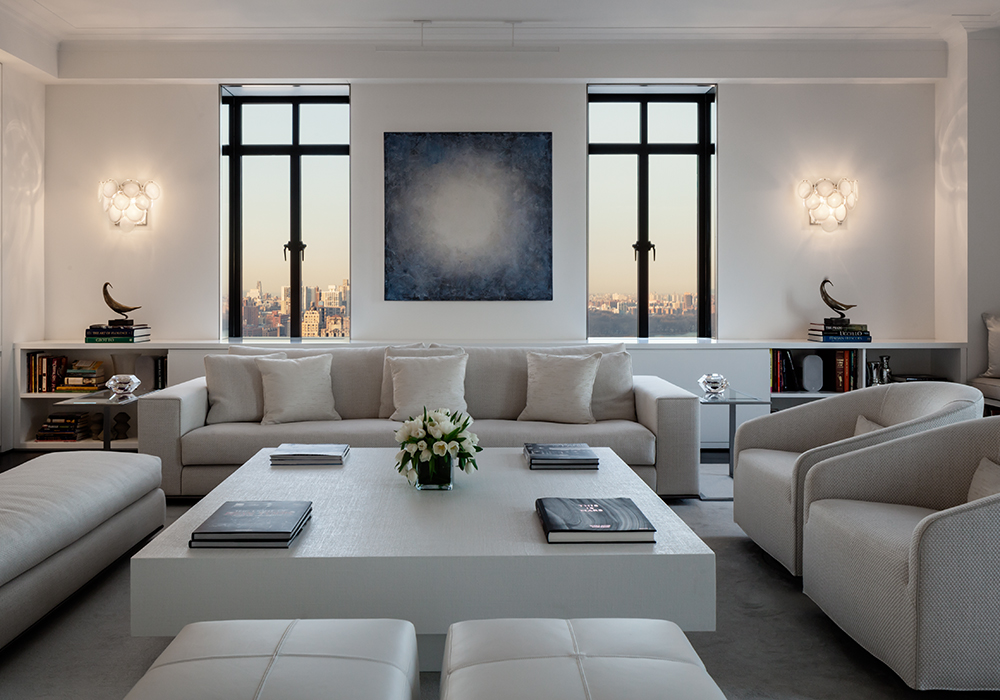
At its core, circadian rhythm automation is the use of networked control systems to modulate environmental variables—primarily light and temperature—in a manner that reinforces the human 24-hour internal clock. While the term is frequently co-opted by consumer electronics brands to describe simple scheduling features, a professional-grade implementation involves a dynamic feedback loop between astronomical data, occupancy sensors, and high-fidelity LED engines capable of deep-red and cyan-enhanced spectral tuning.
A common misunderstanding is the belief that “warm” light always equals “night mode” and “cool” light always equals “day mode.” In reality, biological stimulation is a function of intensity (lux), duration, and timing, not just color temperature (Kelvin). A very bright warm light can still suppress melatonin if the photon density is high enough. True automation accounts for this by calculating “melanopic lux”—a measurement of how much light is actually reaching the specific receptors in the eye that signal the brain to wake up.
Furthermore, oversimplification often leads to the “static automation” trap. Many systems are programmed on a rigid 12-hour cycle that does not account for seasonal shifts in daylight or the specific chronotype (morning lark vs. night owl) of the individual. Effective automation must be adaptive. It should recognize that a resident who stayed up late may need a “soft start” the next morning rather than a jarring blast of 6500K blue light that could induce cortisol spikes at an inappropriate biological time.
The Evolutionary and Systemic Context
Circadian rhythm automation the human species evolved under the “Goldilocks” conditions of the solar cycle. For millennia, the only significant sources of blue-rich light were the sun and the sky. Firelight, while providing visibility, is almost entirely devoid of the short-wave blue light that triggers alertness. Consequently, our biology developed a high sensitivity to these specific wavelengths as a primary signal for “daytime.”
The systemic shift began with the Industrial Revolution and accelerated with the invention of the incandescent bulb, but the true rupture occurred with the advent of LED backlighting and high-efficiency fluorescent lighting. We moved from a society that experienced 100,000 lux outdoors to one that spends 90% of its time under 300 to 500 lux of static, poorly balanced light.
This environmental stagnation creates a “flat” biological signal. Without the high-contrast peaks of midday sun and the absolute darkness of night, the suprachiasmatic nucleus (SCN) in the brain—the master clock—becomes desynchronized. The result is a systemic failure of the body’s repair mechanisms, which primarily occur during deep sleep cycles initiated by the natural rise of melatonin. Automated systems are an attempt to re-engineer this lost contrast back into our lives.
Conceptual Frameworks and Mental Models Circadian Rhythm Automation
To design an automated biological environment, one must move through several layered mental models that define how light interacts with the body.
-
The Entrainment Model: This framework views the automated system as a “zeitgeber” (time-giver). The goal here is strict synchronization. The system is designed to provide a “signal” so strong that it overrides minor disruptions (like a late-night phone screen use), ensuring the body remains on a consistent track.
-
The Atmospheric Transition Model: This model prioritizes the psychological shift over the physiological one. It focuses on the “fade” rates—the speed at which light transitions from one state to another. Humans are sensitive to sudden changes; therefore, this framework uses long, 90-minute transitions to mimic civil, nautical, and astronomical twilight.
-
The Chronotype Personalization Model: This recognizes that “standard time” is a social construct. This framework adapts the automation to the user’s specific genetic predisposition. For a “night owl,” the system might shift the entire daily peak two hours later to prevent “sleep inertia” and align with their natural peak productivity.
Each of these models has limits. The Entrainment Model can feel oppressive if it doesn’t allow for manual overrides, while the Atmospheric Model might be too subtle to provide the necessary biological trigger for someone with a high threshold for light sensitivity.
Key Categories and Variations
When selecting an architecture for circadian rhythm automation, the trade-offs involve complexity, cost, and biological efficacy.
| Category | Primary Mechanism | Pros | Cons |
| CCT Tuning | Correlated Color Temperature shifts (Warm to Cool) | Cost-effective; widely available. | Lacks spectral depth; may not hit specific melanopic peaks. |
| Full Spectral Control | Multi-channel LEDs (RGB + Mint + Amber + Lime) | Highly accurate sun mimicry; superior color rendering. | Expensive; requires sophisticated controllers. |
| Intensity Scheduling | Dimming protocols without color change | Easiest to implement in legacy buildings. | Weak biological signal compared to spectral shifts. |
| Daylight Harvesting | Motorized shades + Photo-sensors | Most natural; uses actual solar energy. | Dependent on weather/geography; privacy issues. |
| Occupancy-Adaptive | Sensor-triggered “Scene” logic | Saves energy; prevents nighttime light shocks. | High risk of “ghost” triggers or system confusion. |
The decision logic for these systems usually follows a “hierarchy of needs.” If the goal is purely health-centric, Full Spectral Control is the gold standard. If the goal is energy efficiency with a secondary health benefit, Daylight Harvesting combined with CCT Tuning is the more pragmatic route.
Real-World Scenarios Circadian Rhythm Automation and Constraints
Scenario A: The High-Stakes Home Office
A professional working across multiple time zones requires peak cognitive performance at irregular hours.
-
Constraint: The user needs to be alert at 3:00 AM for a London-based call while living in New York.
-
Automation Logic: The system uses “Blue-Pumped” 7000K light 30 minutes before the call to suppress melatonin, followed by a gradual warm-down.
-
Second-Order Effect: This “phase shifting” can lead to extreme fatigue later in the day, requiring a “siesta mode” automation to manage the crash.
Scenario B: The Multi-Generational Household
A home with toddlers and elderly residents.
-
Constraint: Children need early bedtimes; elderly residents need high light levels for safety/visibility due to aging retinas.
-
Automation Logic: Zone-based automation. The hallway uses low-intensity amber “pathway” lighting after 8:00 PM, while the living room maintains higher-CCT task lighting.
-
Failure Mode: A toddler entering a high-CCT zone late at night resets their sleep pressure, leading to insomnia.
Planning, Cost, and Resource Dynamics
Implementing circadian rhythm automation is a capital-intensive endeavor that requires a cross-disciplinary approach. It is not a “DIY” weekend project if topical authority and biological efficacy are the goals.
| Resource Level | Estimated Cost (USD) | Components | Primary Outcome |
| Tier 1: Consumer | $500 – $2,000 | Plug-and-play bulbs, Basic Hub | Atmosphere & Convenience |
| Tier 2: Professional | $5,000 – $20,000 | Wired DALI/KNX systems, High-CRI fixtures | Measurable Biological Impact |
| Tier 3: Enterprise | $50,000+ | Spectral sensors, Integrated HVAC/Shading | Total Environmental Entrainment |
The hidden cost often lies in system drift. Over time, LED phosphors degrade at different rates, meaning a system that provided perfect 2700K light in year one might lean green or pink by year three, necessitating recalibration.
The Risk Landscape and Failure Modes Circadian Rhythm Automation
Automating a biological process is not without peril. The primary risk is incorrect signal timing. If a system glitch causes a burst of high-intensity blue light at 2:00 AM, it doesn’t just wake the user; it initiates a chemical cascade that can shift the heart rate, digestion, and cognitive function for the next 48 hours.
There is also the “Metabolic Mismatch” risk. If the lighting system is signaling “Midday” while the user’s social or dietary schedule signals “Midnight,” the body receives conflicting data. Research suggests this internal friction is a contributor to metabolic disorders and chronic inflammation. Automation must be seen as part of a holistic lifestyle, not a magic bullet that can override poor sleep hygiene or high-sugar diets.
Governance and Long-Term Adaptation
A robust system requires a governance framework to ensure it remains beneficial. This includes:
-
The Seasonal Review: Adjusting transition curves four times a year to align with local sunrise/sunset shifts.
-
The Chronotype Audit: Re-evaluating system timing if the user’s work schedule or age changes (as we age, our eyes require more light to achieve the same biological effect).
-
Technical Drift Check: Using a spectrometer to verify that the LEDs are still hitting the required melanopic ratios.
Measurement, Tracking, and Evaluation
How do we know if circadian rhythm automation is working? We look at leading and lagging indicators.
-
Leading Indicators: Lux levels at the eye (measured via wearable sensors), consistency of the light schedule, and spectral accuracy.
-
Lagging Indicators: Sleep latency (how long it takes to fall asleep), heart rate variability (HRV) during sleep, and subjective “alertness” scores upon waking.
Documentation is key. A “Lighting Log” should track system changes against sleep quality to find the “sweet spot” for that specific environment’s occupants.
Common Misconceptions Circadian Rhythm Automation
-
Myth: Blue light is the enemy. Correction: Blue light is essential during the day for cognitive function and mood. The problem is timing, not the color itself.
-
Myth: “Smart” bulbs are all the same. Correction: Most cheap smart bulbs use pulse-width modulation (PWM) that creates invisible flicker, which can cause headaches even if the “circadian” color is correct.
-
Myth: You can’t have “smart lighting” with old wiring. Correction: Wireless protocols like Zigbee and Clear Connect have made high-end automation possible in historic homes without tearing out walls.
Conclusion
The move toward circadian rhythm automation is a recognition that our built environments have failed us. By reclaiming the light cycle, we are not just adding a luxury feature to a home; we are restoring a fundamental biological requirement that was lost in the transition to modern life. However, success in this field requires more than just hardware. It requires a disciplined, analytical approach to how light, timing, and human biology intersect. As we look toward the future of architecture and wellness, the ability to program our environment to support—rather than subvert—our internal clocks will likely become the standard for any space intended for human flourishing. The automation of the rhythm is, in essence, the automation of our well-being.