Zero-Emission Home Automation: The Definitive Guide to Carbon-Neutral Living
Zero-emission home automation the residential sector stands at a critical juncture in the global effort toward decarbonization. For decades, the pursuit of a “smart home” was primarily an exercise in convenience—voice-controlled lighting, remote thermostat adjustments, and automated security. While these features offered a veneer of modernization, they often lacked a cohesive ecological objective, sometimes even increasing a home’s parasitic energy load. The emergence of a more rigorous, systemic approach seeks to align high-fidelity automation with the absolute elimination of operational carbon. This transition moves beyond the mere purchase of efficient appliances and enters the realm of complex environmental orchestration.
Achieving a home that effectively manages its own carbon footprint to the point of neutrality requires a fundamental reimagining of the domestic infrastructure. It is no longer sufficient for a home to be “efficient”; it must be intelligent enough to synchronize its consumption with the volatility of renewable energy production. This involves a shift from static efficiency to dynamic load flexibility. In this context, the home’s operating system acts as a sophisticated energy broker, negotiating between on-site solar generation, battery storage, and the fluctuating demands of heating, cooling, and transport.
The technical friction inherent in this shift is significant. To reach a state where residential living contributes zero net emissions, one must navigate the interplay between hardware longevity, software interoperability, and the thermodynamics of the building envelope. It requires an editorial lens that looks past the marketing hype of “green tech” to examine the underlying logic of carbon-neutral living. This article serves as a definitive exploration of that logic, analyzing the frameworks, risks, and logistical realities of the next generation of residential design.
Understanding “Zero-Emission Home Automation”
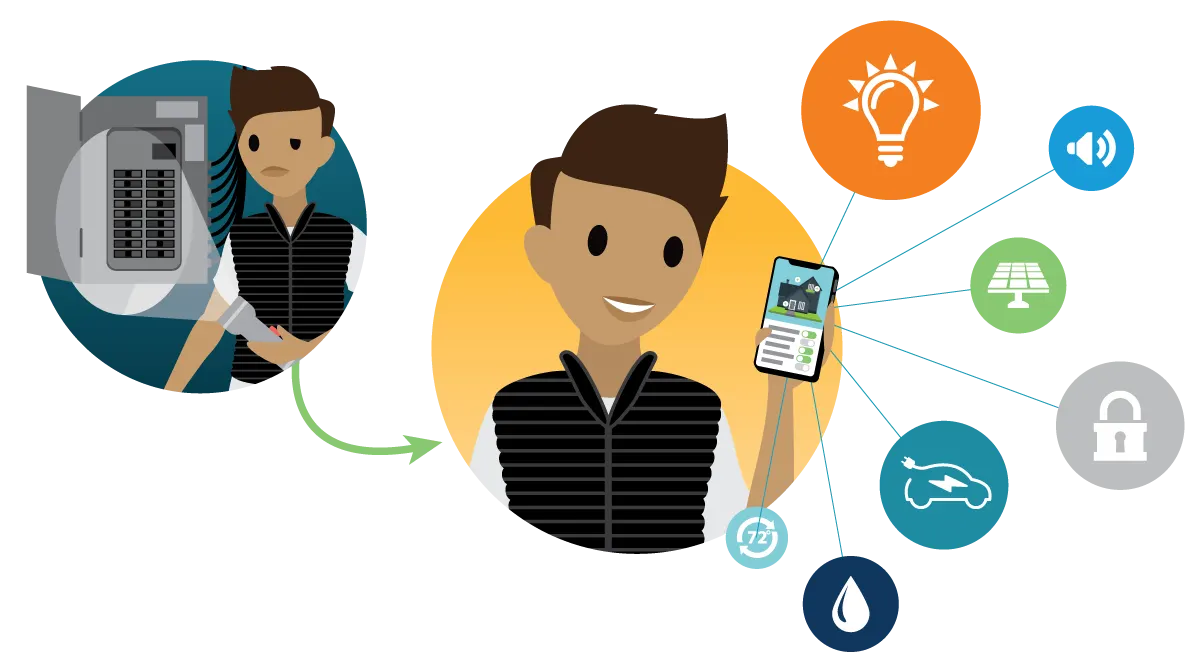
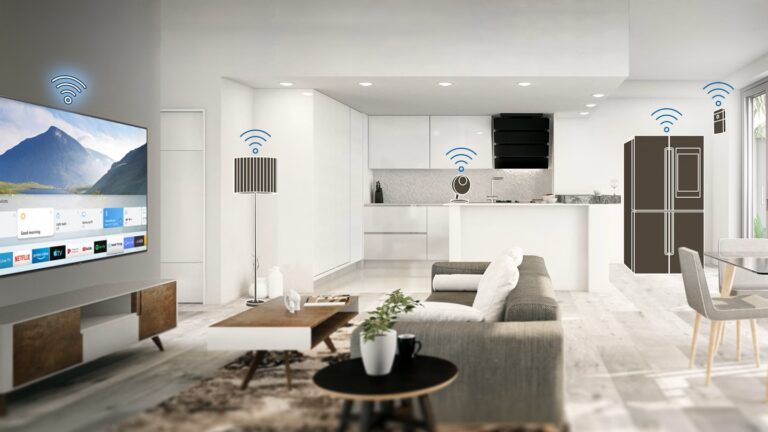
To define Zero-Emission Home Automation accurately, one must look beyond the individual devices and focus on the “carbon-weighted” logic of the entire system. It is the use of networked sensors and predictive algorithms to ensure that every watt of electricity consumed is matched by a watt produced from a carbon-free source, often in real-time. Unlike traditional automation, which prioritizes user comfort at any cost, this discipline introduces a secondary, and often primary, variable: the carbon intensity of the energy source.
A common misunderstanding is that a home with solar panels and a smart thermostat is automatically “zero-emission.” In reality, the timing of energy use is as critical as the volume. A home that consumes massive amounts of energy at night—pulling from a coal-heavy grid—cannot claim neutrality even if it overproduced solar energy during the day, unless it utilizes sophisticated storage and “load-shifting” automation. True integration requires the home to “forecast” its own needs based on weather patterns, grid signals, and inhabitant behavior.
Oversimplification in this niche often leads to the “efficiency paradox,” where automated convenience leads to higher overall consumption. For instance, an automated blinds system might save on cooling costs, but if the motors and controllers consume more energy in standby mode than the thermal savings they provide, the system is a net negative. Zero-Emission Home Automation must therefore operate on a “parasitic-load” budget, where the digital layer itself is as lean as the hardware it manages.
Evolutionary Context: From Passive Solar to Active Intelligence
Zero-emission home automation the trajectory of the sustainable home has moved through three distinct eras. The Passive Era (1970s–1990s) relied on architectural “brute force”—thick insulation, southern-facing windows, and thermal mass. These homes were quiet and efficient but lacked the ability to respond to changing grid conditions or varying occupancy patterns. They were “dumb” but durable.
The Efficiency Era (2000s–2015) introduced the first wave of smart devices. High-efficiency HVAC systems and LED lighting were paired with basic programmable timers. However, these systems were largely siloed; the water heater did not know what the solar inverter was doing, and the car charger operated independently of the household load. This lack of coordination meant that even “efficient” homes still relied heavily on the grid during peak carbon hours.
We have now entered the Orchestration Era. This is the era of the “Home Energy Management System” (HEMS). Technology has matured to the point where the home can act as a micro-grid. In this phase, the building envelope, the electrical system, and the digital automation are treated as a single, integrated organism. The goal is no longer just to use less, but to use energy “correctly” within the context of the global carbon cycle.
Conceptual Frameworks and Mental Models
To master the implementation of zero-emission systems, one must adopt specific mental models that prioritize systemic health over individual component performance.
-
The Thermal Battery Model: Instead of viewing a water heater or a radiant floor solely as a comfort device, this model treats them as energy storage units. In a zero-emission framework, the automation system “overheats” the water or the floor when solar production is at its peak, storing that energy as heat to be used later when the sun goes down, effectively acting as a battery with zero chemical degradation.
-
The Demand-Side Flexibility Framework: This model moves away from the idea that supply must always meet demand. Instead, the home automates the demand to meet the supply. Non-critical tasks—like dishwashing, laundry, or pool filtration—are automatically delayed by the system until carbon-free energy is available.
-
The “Negawatt” Accounting Model: This framework treats a saved watt as more valuable than a produced watt. It focuses automation on “vampire” loads, using smart breakers to physically disconnect unused circuits, ensuring that the digital infrastructure does not become its own environmental burden.
Key Categories of Integrated Decarbonization
Achieving a zero-emission state requires the coordination of several technological pillars. The trade-offs involved often relate to initial capital expenditure versus long-term operational resilience.
Decision Logic: Retrofit vs. New Build
In a new build, the priority should be the Automated Envelope and Intelligent Breaker Panels, as these are difficult to install later. In a retrofit scenario, the most effective “bang-for-buck” is usually Predictive HVAC and Dynamic Load Shifting, which utilize software to optimize existing (or slightly upgraded) hardware.
Detailed Real-World Implementation Scenarios Zero-Emission Home Automation
Scenario A: The “Cloudy Day” Mitigation
A home in a temperate climate faces a three-day period of low solar irradiance.
-
Automation Logic: The system identifies the weather trend via satellite data. It preemptively lowers the home’s thermal baseline by 2 degrees while solar is still available. It throttles EV charging to “minimum viable range” and disables high-draw decorative lighting.
-
Outcome: The home remains functional without pulling from the grid during peak-rate, high-carbon evening hours.
-
Failure Mode: If the weather forecast is inaccurate, the home may be unnecessarily cold, leading to inhabitant frustration and “manual override” which breaks the zero-emission logic.
Scenario B: The Grid-Interactive Water Heater
The local utility experiences a surge in demand due to a regional heatwave.
-
Automation Logic: The home receives a “Demand Response” signal. The intelligent water heater instantly shuts down its heating element, but because the system had “super-heated” the tank during the morning solar peak, the inhabitants still have hot water for showers.
-
Second-order Effect: By reducing the grid load at a critical time, the home helps prevent the utility from spinning up a “peaker” gas plant, extending the zero-emission impact beyond the property line.
Planning, Cost, and Resource Dynamics
The transition to Zero-Emission Home Automation is a front-loaded investment. While operational costs drop significantly (sometimes to near-zero), the “soft costs” of integration and the hardware premiums are substantial.
The opportunity cost of ignoring automation in a sustainable build is the “Storage Mismatch.” Without automation, a homeowner might buy a battery that is twice as large (and twice as expensive) as they actually need, simply because they aren’t managing their loads intelligently.
Tools, Strategies, and Support Systems
A robust decarbonization strategy requires a specific set of diagnostic and operational tools:
-
Circuit-Level Monitoring: Devices that use “Current Transformers” (CT clamps) to see exactly where every watt is going in real-time.
-
Open-Standard Communication: Utilizing protocols like Matter or Thread to ensure that a heat pump from one brand can talk to a solar inverter from another.
-
Local Processing Hubs: Avoiding cloud-dependent systems to ensure that the home’s energy logic continues to function during internet outages.
-
Hyper-Local Weather Stations: Providing the automation system with real-time irradiance data rather than relying on distant airport weather stations.
Risk Landscape and Failure Modes
The risks of a fully automated, zero-emission home are not just technical, but systemic.
-
The Software Obsolescence Trap: If a critical component (like a smart breaker panel) relies on a proprietary cloud service that is discontinued, the home’s “intelligence” evaporates, potentially leaving the home in an inefficient state.
-
Sensor Drift and Miscalibration: In a zero-emission home, a temperature sensor that is off by 3 degrees can cause a heat pump to work 20% harder than necessary, silently destroying the home’s carbon budget.
-
Cyber-Physical Cascades: As the home becomes more grid-interactive, it becomes a target. A hack that forces thousands of smart homes to turn on their water heaters simultaneously could theoretically destabilize the local electrical grid.
Governance, Maintenance, and Long-Term Adaptation
A zero-emission home is a living system that requires an “Environmental Governance” plan.
-
Quarterly Carbon Audits: Reviewing the system logs to see how much energy was pulled from the grid during high-intensity hours and adjusting automation rules accordingly.
-
Hardware Hygiene: Cleaning solar panels and servicing heat pump filters is no longer just about longevity; it is about maintaining the specific “Coefficient of Performance” (COP) required to stay within the carbon budget.
-
Firmware Staging: Ensuring that “smart” updates don’t introduce new energy-heavy features that increase the system’s standby power consumption.
Measurement, Tracking, and Evaluation
Evaluation in this niche should move away from “dollars saved” and toward “carbon avoided.”
-
Leading Indicators: Solar self-consumption ratio (percentage of solar used on-site vs. exported) and “Peak-Shave” efficacy.
-
Lagging Indicators: Total annual grid import in kilowatt-hours (kWh) and the “Carbon Intensity” of that import.
Documentation is key. A “Home Energy Passport” that tracks the system’s performance over years provides massive value for resale, proving to future buyers that the home is not just smart, but truly zero-emission.
Common Misconceptions and Oversimplifications
-
Myth: Being “Off-Grid” is the same as being Zero-Emission. Correction: Off-grid homes often rely on backup propane or gas generators. A “grid-tied” home with smart automation can often have a lower carbon footprint by sharing green energy with the community.
-
Myth: Smart homes are energy hogs. Correction: While some early smart homes had high standby loads, modern Zero-Emission Home Automation uses ultra-low-power protocols (like Thread) that consume less power than a single nightlight.
-
Myth: You need a giant battery to be carbon neutral. Correction: Intelligent “demand response” can reduce the required battery size by up to 40% by moving the loads to when the sun is shining.
Ethical and Practical Considerations
The move toward high-end automation raises questions of “Environmental Equity.” If only the wealthy can afford the systems required to avoid high peak-energy prices, it creates a “poverty trap” for those on the traditional grid. Practically, homeowners must also consider the “Privacy-Efficiency Trade-off.” To be truly predictive, a system needs to know when you wake up, when you shower, and when you leave the house. Balancing this data collection with personal privacy is the final frontier of the intelligent home.
Conclusion
The transition to Zero-Emission Home Automation is an evolution from the home as a passive shelter to the home as an active participant in the global energy transition. It is a recognition that the digital and the biological are now inextricably linked. By leveraging the power of predictive logic, we can finally bridge the gap between our desire for a modern, convenient lifestyle and the urgent necessity of planetary stewardship. The ultimate success of these systems will be measured not by the complexity of their interfaces, but by their ability to disappear—providing a seamless, comfortable existence that leaves no trace on the atmosphere.