Ambient Assisted Living: The Definitive Guide to Aging in Place
Ambient assisted living the global demographic shift toward an aging population presents one of the most significant socioeconomic challenges of the twenty-first century. As the “silver tsunami” accelerates, the traditional models of institutional care—nursing homes and assisted living facilities—face mounting pressure from skyrocketing costs, labor shortages, and a fundamental desire among seniors to maintain autonomy within their own homes. This tension has catalyzed the development of a sophisticated technological response designed to bridge the gap between independent living and professional medical oversight.
The objective is to create a living space that is inherently aware of its occupant’s needs, capable of detecting subtle physiological or behavioral changes before they escalate into acute medical crises. It represents a transition from “care as a destination” to “care as a service” that is woven into the very fabric of the residential infrastructure.
However, the implementation of such systems is not merely a matter of deploying cameras or wearable panic buttons. True sophistication in this field involves the orchestration of sensors, data analytics, and human intervention protocols that respect privacy while ensuring safety. It requires a deep understanding of “pattern of life” analysis, where the system learns the unique rhythms of an individual and identifies deviations that could indicate cognitive decline, physical injury, or social isolation.
This analysis serves as a definitive exploration of the mechanisms, ethical landscapes, and technical frameworks required to sustain a high quality of life through environmental intelligence. We will move beyond the superficial “smart home” gadgets to examine the rigorous engineering and psychological considerations that make a home truly supportive.
Understanding “ambient assisted living”

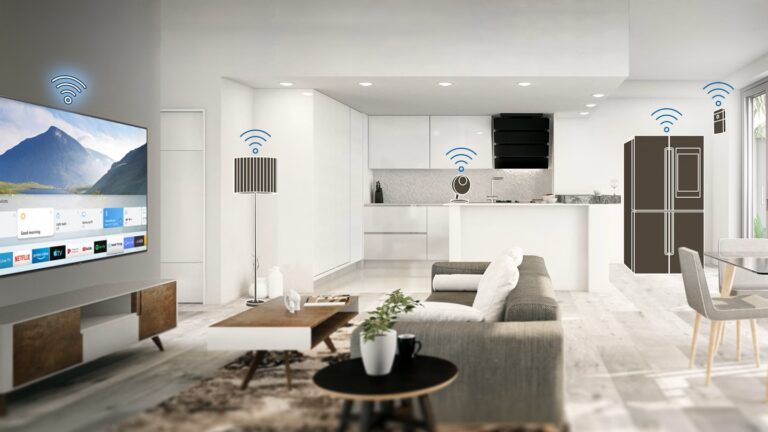
To define ambient assisted living accurately, one must prioritize the “ambient” aspect of the term. Unlike traditional telecare, which often requires the user to remember to wear a device or press a button, an ambient system is non-intrusive and environment-centric. It utilizes a network of sensors—motion, vibration, acoustic, and thermal—to create a silent safety net. The intelligence lies in the system’s ability to interpret environmental data to make informed guesses about the occupant’s well-being.
A primary oversimplification in this field is the assumption that more technology equals more safety. In reality, the efficacy of these systems is inversely proportional to the “cognitive load” they place on the user. If an elderly person has to troubleshoot a Wi-Fi connection or charge four different devices daily, the system has failed. True integration means the technology recedes into the background, becoming as unremarkable as the plumbing or the electrical wiring.
Common misunderstandings also arise regarding the goal of these systems. They are not intended to replace human caregivers but to optimize their intervention. By providing “passive data,” these systems allow family members and medical professionals to focus on meaningful interaction rather than spending their time performing routine checks.
Historical Evolution: From Beepers to Biometrics
Ambient assisted living the trajectory of assisted living technology has moved through several distinct “generations.” These were strictly reactive and had a significant flaw: in many serious falls, the user is unconscious or in too much shock to press the button.
The Second Generation introduced basic motion sensors and “check-in” timers. While an improvement, these systems were “dumb”; they couldn’t distinguish between a resident taking a long nap and a resident who had suffered a stroke. The Third Generation—the current state of the art—leverages machine learning and sensor fusion. We have moved from detecting presence to analyzing behavior. Current systems can track gait speed, sleep quality, and even hydration levels via smart water meters, providing a holistic view of health that was previously only possible in a hospital setting.
Conceptual Frameworks and Mental Models Ambient Assisted Living
To design a truly supportive environment, engineers and caregivers utilize specific mental models:
-
The Digital Twin of Routine: This model creates a virtual baseline of the resident’s “perfect day.” Every deviation is measured against this twin. If the real-world resident deviates too far (e.g., staying in the bathroom for two hours instead of twenty minutes), the system initiates a tiered alert protocol.
-
The Hierarchy of Intervention: This framework treats technology as the first line of defense, followed by a remote operator, then a family member, and finally emergency services. The goal is to “filter” events so that 911 is only called when absolutely necessary, preventing “hospitalization trauma.”
-
The Compensatory Design Model: This views the home not as a shelter, but as a prosthetic. If a resident has failing eyesight, the home “compensates” with high-contrast automated lighting and voice-guided navigation. If they have memory loss, the home provides “just-in-time” prompts (e.g., “The stove has been on for 30 minutes, are you still cooking?”).
Key Categories and Technical Variations
The implementation of support systems varies based on the level of cognitive and physical decline being addressed.
| Category | Primary Technology | Benefit | Trade-off |
| Fall Detection | Radar/Lidar/Accelerometers | Instant alert without buttons | High sensitivity can cause false alarms |
| Activity Monitoring | Door/Motion/Power sensors | Tracks nutrition and hygiene | Slow to detect acute emergencies |
| Cognitive Support | Voice AI/Smart Displays | Reminders for meds/appointments | Can be confusing for late-stage dementia |
| Vital Telemetry | Sleep mats/Smart toilets | Early detection of chronic issues | Requires high data security standards |
| Social Connectivity | Integrated Video/Shared Portals | Reduces isolation and depression | Risk of “digital fatigue” |
Decision Logic: Selecting the Right Tier
The choice depends on the “Autonomy-to-Risk Ratio.” A resident in the early stages of Parkinson’s might require high-fidelity gait analysis (Fall Detection), whereas a resident with early-stage Alzheimer’s would benefit more from “Wayfinding” and “Inventory Monitoring” to ensure they are eating and not getting lost within the home.
Detailed Real-World Scenarios Ambient Assisted Living
Scenario A: The “UTI” Detection
A common cause of sudden cognitive decline and falls in the elderly is a Urinary Tract Infection (UTI).
-
System Action: Acoustic and motion sensors in the bathroom detect a 300% increase in nighttime bathroom trips over a 48-hour period.
-
Outcome: The system alerts the daughter, who schedules a doctor’s visit before the resident becomes delirious or suffers a fall.
-
Failure Mode: If the system is not calibrated to the resident’s baseline, it might ignore the change as “just a bad night’s sleep.”
Scenario B: The Kitchen Safety Loop
A resident starts boiling water but forgets and goes to the living room to watch TV.
-
System Action: A smart stove guard detects the rising temperature without a corresponding motion trigger in the kitchen. It cuts power to the stove and plays a gentle audio reminder.
-
Second-order Effect: This preserves the resident’s dignity by preventing a fire department visit while allowing them to continue cooking their own meals safely.
Planning, Cost, and Resource Dynamics
The cost of implementing ambient assisted living is often weighed against the monthly cost of a skilled nursing facility, which in the US can average $5,000 to $10,000 per month.
| System Tier | Est. Cost (USD) | Hardware Complexity | Maintenance Level |
| Entry Level | $500 – $1,500 | Basic PERS + Motion sensors | Low (Battery checks) |
| Standard Ambient | $2,000 – $5,000 | Radar falls, Stove guards, Med-dispensers | Medium (Software updates) |
| Total Integration | $10,000+ | Full sensor fusion, AI-gait, Smart plumbing | High (Professional monitoring) |
The opportunity cost of delay is significant. Installing these systems before a crisis allows the resident to acclimate to the technology while their cognitive health is higher, increasing the long-term success of the “age in place” strategy.
Risk Landscape and Failure Modes Ambient Assisted Living
The risks in this niche are not just technical, but psychological.
-
The Panopticon Effect: If a resident feels “watched,” they may alter their behavior, leading to stress and social withdrawal. This is why “camera-less” solutions using radar or thermal silhouettes are preferred.
-
Connectivity Fragility: If the home’s internet or power fails, the safety net disappears. Systems must have local-edge processing and cellular backup to ensure the “fall detection” doesn’t go offline during a storm.
-
Alarm Desensitization: If family members receive five “low-level” alerts a day (e.g., “Mom didn’t open the fridge by 9 AM”), they may eventually ignore a high-level alert. Tiered notification logic is essential.
Governance and Long-Term Adaptation
A supportive home is not a static installation. It requires a “Care Governance” plan:
-
The Sensitivity Review: Every six months, the system’s alert thresholds should be tightened or loosened based on the resident’s changing physical state.
-
Data Privacy Audit: Ensuring that the sensitive “pattern of life” data is encrypted and that third-party vendors do not have access to behavioral metadata.
-
Hardware Lifecycle Management: Replacing sensors before they fail; PIR sensors, for example, have a finite lifespan before their sensitivity drifts.
Measurement, Tracking, and Evaluation
Evaluation should move from “Are they alive?” to “Are they thriving?”
-
Leading Indicators: Steps per day, frequency of social interactions (phone/video calls), and sleep consistency.
-
Lagging Indicators: Number of emergency room visits, weight stability, and depression scale scores.
Documentation is critical. A weekly “Wellness Report” generated by the system allows doctors to see trends—like a slow decrease in walking speed—that are impossible to catch during a 15-minute office visit.
Common Misconceptions Ambient Assisted Living
-
Myth: It’s too late for someone with dementia. Correction: Early-to-mid stage patients benefit immensely from “environmental cues” like automated lighting that prevents “sundowning” confusion.
-
Myth: Seniors hate technology. Correction: Seniors hate complicated technology. They value technology that provides a tangible sense of security and connection.
-
Myth: It’s only for the wealthy. Correction: Many insurance providers are beginning to subsidize these systems because the cost of one hip fracture far exceeds the cost of a full-home sensor suite.
Conclusion
The promise of ambient assisted living lies in its ability to restore the balance of power between the aging individual and their environment. By replacing intrusive surveillance with supportive intelligence, we are creating a world where the home evolves alongside its occupant. This transition is not merely about preventing accidents; it is about preserving the narrative of a life lived with dignity and independence. As the technology matures and the cost of hardware continues to fall, the “intelligent home” will cease to be a luxury and will become the foundational infrastructure of a compassionate society. .