How to Plan Home Automation on a Budget: A Strategic Guide
How to plan home automation on a budget the democratization of home automation technology has shifted the conversation from “if” a household can be connected to “how” it can be achieved without catastrophic capital expenditure. For years, the smart home was viewed as a luxury amenity, tethered to high-end proprietary systems and professional installation. However, the maturation of open protocols and the commoditization of silicon have inverted this model, placing the power of complex system design into the hands of the individual.
To effectively navigate this landscape, one must view home automation not as a collection of high-tech gadgets, but as an exercise in infrastructure management. The primary challenge is not the purchase of devices, but the integration of disparate hardware into a cohesive, reliable network. This requires a transition from impulse-driven consumerism toward a long-term engineering mindset. A failure to plan is often more expensive than the hardware itself, leading to “technology debt” where incompatible devices must be replaced prematurely.
Developing a robust automated environment requires a nuanced understanding of the trade-offs between cost, privacy, and reliability. While a low-cost entry point is accessible to almost anyone, the hidden costs of cloud dependency, latency, and security vulnerabilities can quickly accumulate. True efficiency in this domain is found through strategic layering—identifying which components require premium investment and which can be solved with budget-friendly, open-source alternatives.
Understanding “how to plan home automation on a budget”
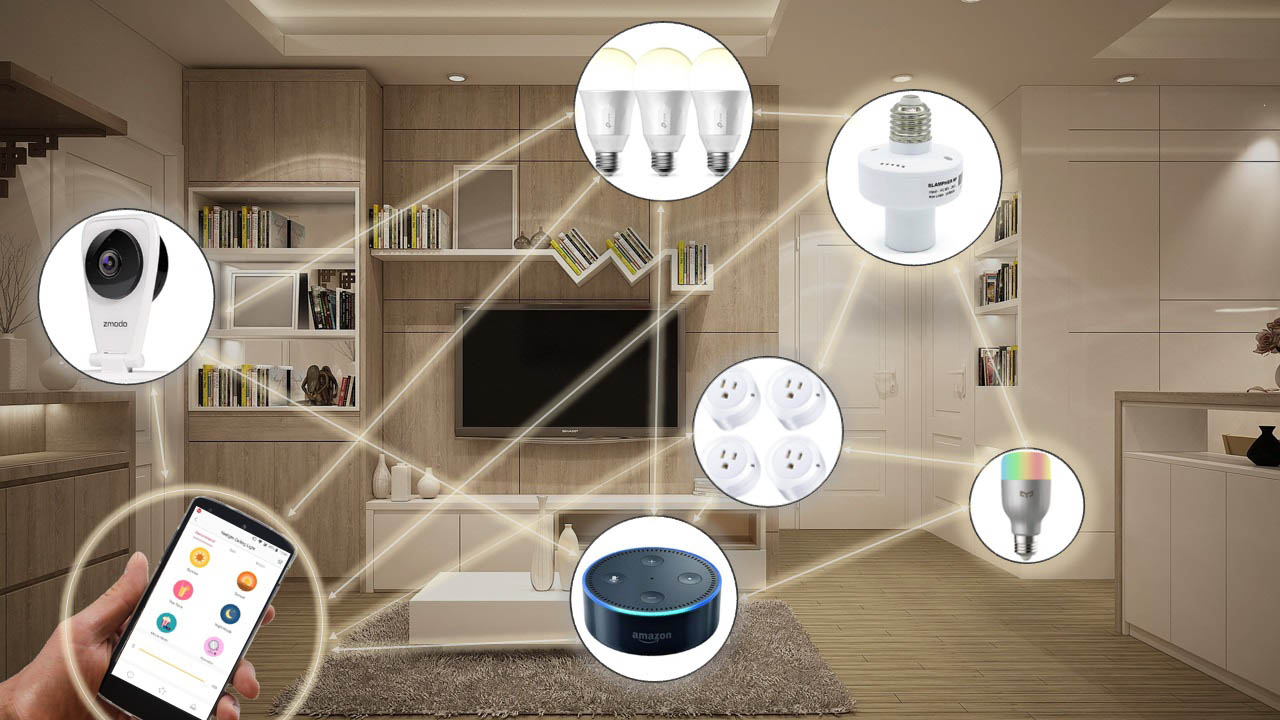
The pursuit of how to plan home automation on a budget is frequently misunderstood as a search for the cheapest individual products. In reality, budgetary planning in this context is an optimization problem: how to maximize functional utility while minimizing total cost of ownership (TCO). This involves a multi-perspective analysis that looks past the sticker price to consider energy savings, time recuperation, and the avoidance of “orphaned” hardware that no longer receives updates.
A common pitfall is the “App Silo” effect. Users buy the least expensive bulb, then the least expensive plug, then the least expensive vacuum, only to realize they now manage ten different applications and none of the devices can trigger one another. A budget-conscious plan must prioritize a central logic controller—even a free or low-cost software-based one—to ensure that the system scales linearly rather than exponentially in complexity.
Furthermore, there is a distinct risk in oversimplifying the “budget” aspect. A truly cheap system that fails 10% of the time is more expensive than a moderately priced system that works 100% of the time, due to the frustration and labor involved in constant troubleshooting. Effective planning recognizes that “budget” is a relative term; it is about the surgical application of funds to the parts of the system that provide the highest return on convenience and security.
The Economic Evolution of Smart Systems
How to plan home automation on a budget historically, home automation was governed by the “Custom Electronic Design and Installation Association” (CEDIA) model. Systems like Crestron or Control4 required specialized wiring (like KNX) and proprietary processors costing thousands of dollars. The budget was fixed and high, often tied to the mortgage of a new construction.
The shift began with the rise of the “Internet of Things” (IoT). Initially, this led to a fragmented market where Wi-Fi-based devices offered low entry costs but high long-term instability. The current era is defined by the move toward local control. Technologies that once cost a premium, such as local mesh networking (Zigbee/Z-Wave) and local processing units, have plummeted in price. We are now in a period where a $50 microcomputer can outperform a $2,000 legacy controller from a decade ago. This shift is the fundamental enabler of modern budget planning.
Conceptual Frameworks for Lean Automation How To Plan Home Automation On a Budget
To avoid the chaos of haphazard device acquisition, three primary mental models should guide the planning process.
The Hub-and-Spoke Resilience Model
In this framework, the “Hub” is the intellectual center. By investing a larger portion of the initial budget into a high-quality, locally controlled hub, the “Spokes” (bulbs, sensors, plugs) can be the most affordable, generic versions available. The hub compensates for the lack of “intelligence” in the end-devices.
The “Critical Path” Automation Hierarchy
Prioritize automation based on the frequency of use and the impact of failure.
-
Security/Safety: High impact, low frequency. (High-reliability budget)
-
Climate Control: Medium impact, medium frequency. (Efficiency budget)
-
Convenience/Lighting: Low impact, high frequency. (Low-cost/Scale budget)
The Five-Year Utility Projection
Before any purchase, evaluate if the device relies on a manufacturer’s cloud server. If the company disappears, does the device become a “brick”? A budget plan avoids cloud-only devices to ensure the system survives corporate acquisitions and bankruptcies.
Key Categories of Affordable Integration
Successful budget planning requires choosing the right communication protocol for the right task. The choice of protocol dictates the hidden costs of the system.
The Power of Refurbished and Open-Box Hardware
A significant pillar of budget planning is the secondary market. Unlike mechanical tools, smart home hardware is often returned by consumers who found it “too complicated.” These open-box items frequently carry 30–50% discounts despite being functionally perfect.
Real-World Scenarios How To Plan Home Automation On a Budget and Resource Constraints
Scenario: The Rental Apartment
-
Constraint: No wiring changes allowed; limited budget ($200).
-
Strategy: Focus on “smart plugs” and battery-powered sensors.
-
Failure Mode: Relying on the landlord’s weak router for 20 Wi-Fi plugs.
-
Refined Plan: Use a cheap secondhand Zigbee hub to offload the network traffic.
Scenario: The Energy-Conscious Homeowner
-
Constraint: High heating bills; $500 initial budget.
-
Strategy: Focus on a smart thermostat and automated window shades.
-
Second-order Effect: The thermostat pays for the next phase of automation (lighting) through utility bill reductions within 18 months.
Cost Dynamics and Lifecycle Management How To Plan Home Automation On a Budget
When calculating how to plan home automation on a budget, one must account for indirect costs such as electricity consumption (standby power) and battery replacement cycles.
Lifecycle Cost Breakdown (3-Year Projection)
The opportunity cost of choosing a complex, high-maintenance system is your personal time. If you spend four hours a month fixing “offline” devices, the “cheap” system has effectively cost you several hundred dollars in labor value.
Strategic Tools and Support Systems
The budget-conscious integrator should leverage “Force Multipliers”—tools that increase the value of existing hardware.
-
Home Assistant: Free, open-source software that bridges different brands. It allows a $5 Ikea sensor to talk to a $200 Sonos speaker.
-
Generic ESP32 Microcontrollers: For those willing to learn basic flashing, these $4 chips can replace $40 proprietary sensors.
-
Zigbee2MQTT: A bridge tool that allows you to use the absolute cheapest Chinese-market sensors with high-end European or American controllers.
-
Used Enterprise Routers: Buying a used commercial-grade Access Point (AP) for $30 provides better stability for smart devices than a new $150 “Gaming” router.
The Risk Landscape of Budget Implementation How To Plan Home Automation On a Budget
Building on a budget introduces specific systemic risks. The primary risk is Protocol Fragmentation. Buying three different brands of “budget” hubs creates a nightmare of interference.
Another risk is Data Privacy as a Subsidy. Many ultra-low-cost devices are cheap because the manufacturer is subsidizing the hardware cost by harvesting your behavioral data. Planning on a budget must involve a decision: are you paying with currency or with privacy? Choosing local-only control (avoiding the cloud) is the only way to mitigate this without increasing the spend.
Governance and Long-Term Adaptation
A budget system requires more rigorous governance than a “money is no object” system. Without a professional installer to call, the homeowner must act as the System Administrator.
-
The Documentation Log: Keep a spreadsheet of every device, its IP address, and its purchase date.
-
The “Sunset” Policy: Every two years, audit which devices are slowing down the network or no longer receiving security patches.
-
Layered Security: Put all “budget” IoT devices on a separate VLAN (Guest Network) so a compromised $10 bulb cannot access your personal banking computer.
Measurement, Tracking, and Evaluation How To Plan Home Automation On a Budget
Success is measured by the “Invisibility Index.” How often do you have to interact with an app to make the house function?
-
Quantitative: Measure the reduction in manual switch flips.
-
Qualitative: The “Guest Test”—can a visitor turn on the guest room light without a manual?
-
Efficiency: Compare year-over-year electricity usage for climate-controlled zones.
Common Misconceptions and Oversimplifications
-
Myth: You need a smart bulb in every socket.
-
Correction: It is often cheaper and more effective to replace one wall switch ($30) than to buy six smart bulbs ($60) for the same fixture.
-
-
Myth: Matter/Thread makes everything else obsolete.
-
Correction: Zigbee is a mature, low-cost standard that will remain viable for a decade. Waiting for the “latest” tech is often a budget killer.
-
-
Myth: Automation is only for “Techies.”
-
Correction: With modern simplified hubs, the “planning” stage is the only technical part; the daily use is simpler than traditional hardware.
-
Synthesis and Adaptability
Planning home automation on a budget is an exercise in intellectual honesty. It requires admitting that not every “cool” feature is necessary and that the most reliable system is often the simplest one. By focusing on a strong central controller, prioritizing local control over cloud convenience, and expanding incrementally, a homeowner can build a system that rivals high-end professional installations at a fraction of the cost.
The goal is to create a home that works for you, rather than a home that you work for. In the long run, the most successful budget plans are those that prioritize “future-proofing” through open standards, ensuring that the investment made today continues to yield dividends in convenience and efficiency for years to come.
Would you like me to create a specific component-by-component hardware list for a starter $250 budget based on these frameworks?