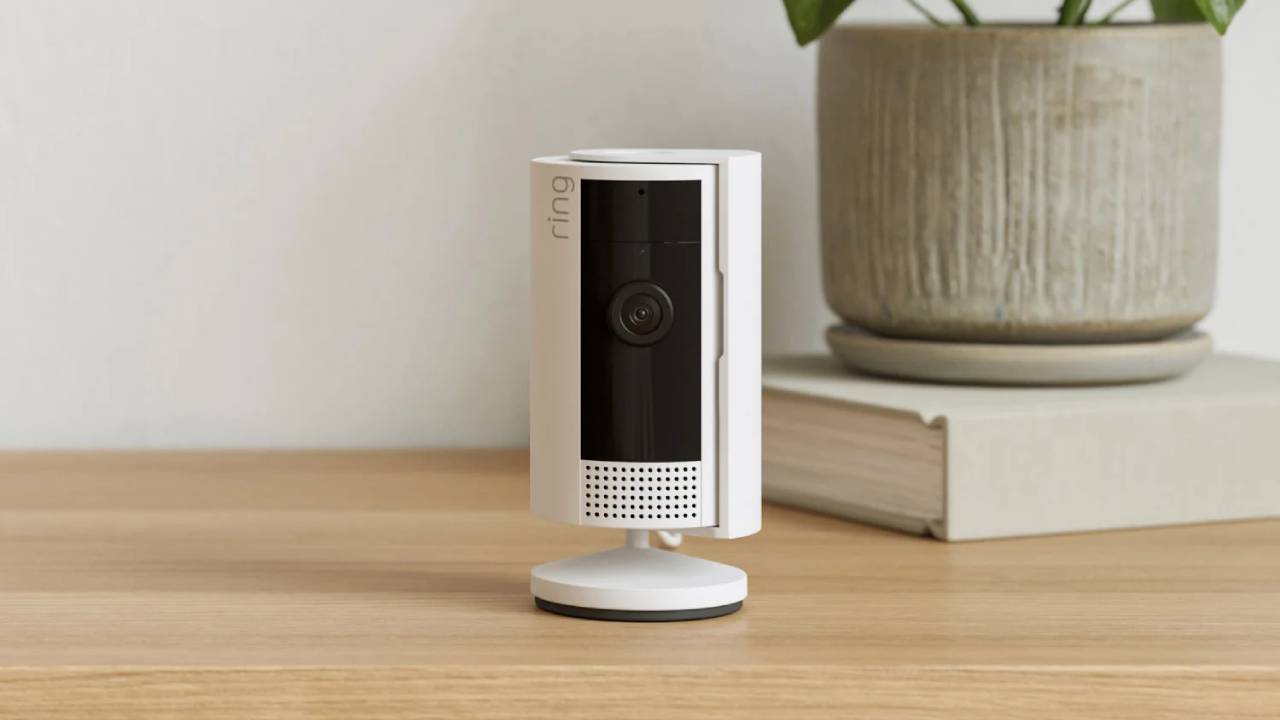
Predictive Home Security: A Definitive Guide to Anticipatory Protection
Predictive home security the paradigm of residential protection has historically been a reactive endeavor. For decades, the industry standard relied on “detect and alert” mechanics—tripping a magnetic reed switch or triggering a Passive Infrared (PIR) sensor only after a perimeter breach had occurred. This traditional model, while functional, essentially serves as a digital autopsy of an intrusion in progress. It documents the loss rather than preventing the occurrence.
The emergence of predictive home security represents a fundamental transition from forensic evidence collection to anticipatory risk mitigation. This shift is driven by the convergence of high-velocity data processing, edge computing, and behavioral analytics. Instead of merely identifying a human shape on a camera, these systems evaluate the context of movement, the historical patterns of a specific neighborhood, and the subtle anomalies in environmental data that suggest intent rather than accidental proximity. It is an attempt to quantify “suspicion” through a rigorous, data-driven lens.
However, the transition to predictive models introduces a complex layer of technical and ethical friction. Moving from a binary “open/closed” state to a probabilistic risk score requires a massive increase in sensor density and algorithmic sophistication. It also necessitates a deeper conversation regarding the boundaries of privacy and the potential for false-positive fatigue. To understand the depth of this field, one must look past the consumer-facing marketing and analyze the underlying architecture of modern threat assessment, the mathematics of pattern recognition, and the logistical realities of maintaining a system that effectively “foresees” trouble.
Understanding “predictive home security”
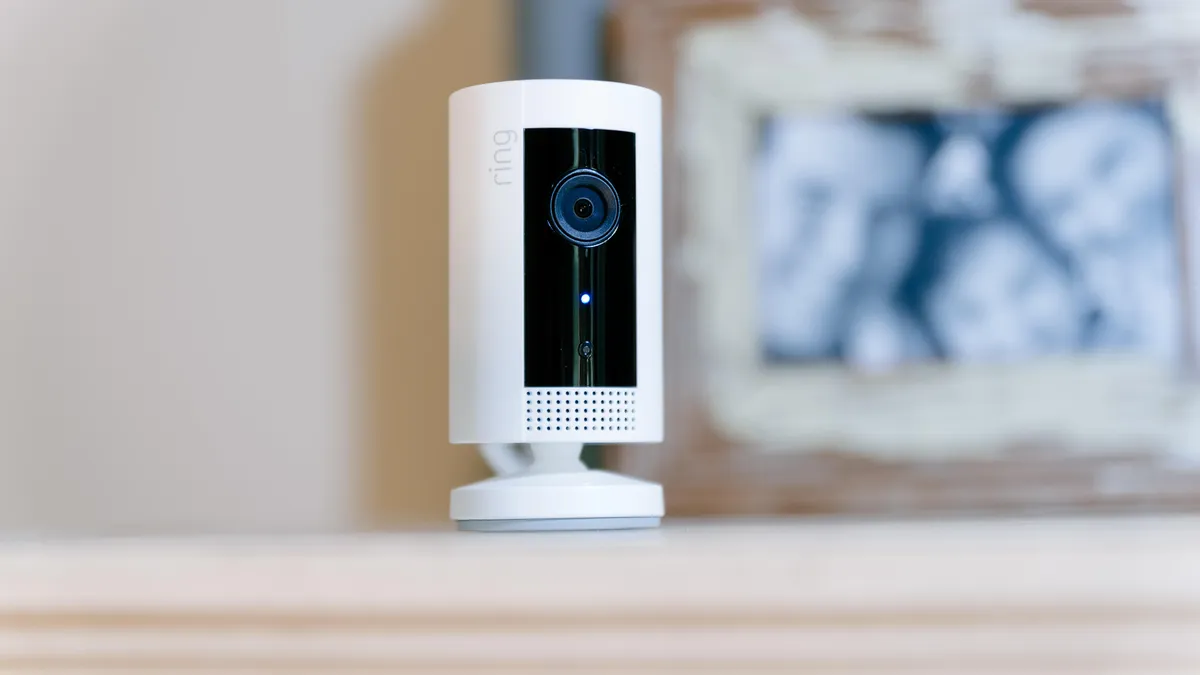
To define predictive home security accurately, one must differentiate it from “smart” security. While a smart system might allow a user to view a live stream from a phone, a predictive system actively interrogates the environment to assign a probability to future events. It operates on the principle of pre-incident indicators. These indicators might include a vehicle circling a block at a specific speed, a sudden change in ambient noise levels, or the presence of a “known-unknown” device signature in the local Wi-Fi spectrum.
A common misunderstanding is that these systems function as a digital “crystal ball.” In reality, they are sophisticated Bayesian inference engines. They take a prior belief about what is “normal” for a specific property and update that belief as new data points arrive. If the system observes a person standing at a front door, it evaluates the duration of the stay, the presence of a delivery package, and the time of day. If the variables don’t align with “delivery” or “known guest,” the system increases the risk score.
Oversimplification in this field often leads to “alert fatigue.” If an algorithm is tuned too aggressively, it treats every stray cat or gust of wind as a potential intruder. True predictive security requires “sensor fusion”—the ability to cross-reference a motion trigger with audio data (e.g., the sound of a muffled footfall vs. a branch breaking) and perhaps even vibration data from the ground or the home’s structure. Without this layered approach, the system is merely a more expensive version of a standard alarm.
The Historical Evolution of Defensive Systems
Predictive home security the trajectory of home defense has moved through four distinct eras. The first was the Mechanical Era, defined by physical barriers—locks, bars, and reinforced doors. Success was measured by the time it took for a physical breach to occur. The second was the Electronic Era, which introduced the “monitored” alarm. This era relied on the telephone line and central stations, but it was plagued by high false-alarm rates and slow response times.
The third era, the Connected Era, brought the cloud and video streaming. This allowed homeowners to become their own monitors. However, this era also highlighted the “observation paradox”: having 4K footage of a masked intruder stealing a package provides little comfort and even less utility in the moment.
We are currently entering the fourth era: the Predictive Era. This stage is characterized by the decentralization of intelligence. Processing no longer happens solely in a distant cloud server but at the “edge”—within the camera or the hub itself. This allows for sub-second analysis of behavioral patterns. The historical evolution shows a clear trend: we are moving the “point of detection” further away from the front door and further back in time.
Conceptual Frameworks and Mental Models Predictive Home Security
To master the implementation of an anticipatory system, one can utilize several specific mental models:
-
The Concentric Circles of Intent: This model visualizes security as layers of distance. The outermost circle is the neighborhood (community data), the next is the property line (perimeter sensors), then the yard, and finally the structure. Predictive systems analyze the transition speed between these circles. An abrupt movement from the neighborhood circle to the property line at 3:00 AM triggers a different predictive response than a gradual approach.
-
The Baseline Drift Model: Security is not a state but a deviation from a baseline. This model focuses on “pattern-of-life” analysis. By establishing a rigorous baseline of what “normal” looks like (e.g., the mail arrives between 11:00 and 1:00, the neighbor walks their dog at 6:00), the system can instantly identify “drift.”
-
The Red-Teaming Framework: This involves thinking like an adversary to identify system blind spots. A predictive system is modeled to ask: “If I wanted to bypass this sensor, what behavior would I exhibit?” It then monitors for that specific “stealth” behavior, such as slow, rhythmic movement designed to fool standard PIR sensors.
Key Categories and Technical Variations
Not all predictive systems are created equal. They vary based on their primary data source and the complexity of their logic.
| Category | Data Source | Primary Strength | Trade-off |
| Behavioral Video Analytics | Visual Stream (CV) | High accuracy in identifying intent | Resource-intensive; privacy concerns |
| Acoustic Signature Analysis | High-fidelity microphones | Detects “blind spot” threats | High sensitivity to environmental noise |
| RF Mapping/Wi-Fi Sensing | Radio wave disruptions | “Sees” through walls and foliage | Prone to interference from other devices |
| Geofenced Predictive Logic | Mobile GPS/Local ID | Eliminates false alarms from residents | Requires active participation of users |
| Seismic/Vibration Sensing | Ground-level accelerometers | Detects perimeter breaches early | Difficult to calibrate in urban areas |
The decision logic for a homeowner usually follows a “threat-to-friction” ratio. In a high-traffic urban environment, RF mapping might be too chaotic, making Behavioral Video Analytics the more stable choice. In a secluded rural setting, Seismic Sensing provides the longest lead time for detection.
Real-World Scenarios Predictive Home Security and Failure Modes
Scenario A: The “Casing” Detection
A vehicle drives past a residence three times in two hours, slowing down significantly at each pass.
-
Predictive Response: The system cross-references the license plate (if visible) or vehicle type against neighborhood “white-lists.” It alerts the homeowner not of a breach, but of “unusual reconnaissance.”
-
Failure Mode: A new delivery driver looking for a hidden house number triggers a high-level alert, causing unnecessary stress.
Scenario B: The Structural Anomaly
Sensors detect a vibration signature consistent with a heavy tool being used on a side wall, but no motion is detected by cameras.
-
Predictive Response: The system assumes a “blind-spot” intrusion attempt and activates perimeter lighting to “flush out” the potential intruder.
-
Second-Order Effect: If the vibration was actually caused by a nearby construction project or a heavy truck, the system’s “deterrence” actions might annoy neighbors, leading to the homeowner disabling the system.
Planning, Cost, and Resource Dynamics
Predictive systems are significantly more expensive than “off-the-shelf” kits due to the required processing power and sensor quality.
| System Tier | Est. Cost (USD) | Hardware Complexity | Expected Utility |
| Consumer-Prosumer | $1,500 – $4,000 | Edge-AI Cameras, Hub | Alert-based prediction |
| Integrated Residential | $5,000 – $15,000 | Sensor Fusion, 24/7 Monitoring | Proactive deterrence |
| High-Net-Worth/Estate | $25,000+ | RF Sensing, Thermal, Seismic | Full anticipatory defense |
The primary opportunity cost in predictive security is privacy. To gain a high degree of predictive accuracy, the system must “know” a great deal about the residents’ habits, which creates a data silo that must be aggressively protected.
The Risk Landscape and Compounding Failures Predictive Home Security
The most significant risk in predictive home security is “Algorithmic Bias.” If the underlying model is trained on flawed data, it may disproportionately flag certain types of vehicles or individuals as “suspicious” based on arbitrary factors. This creates a social risk and a potential legal liability for the homeowner.
Another compounding risk is “Technical Cascading.” Since predictive systems are often interconnected, a failure in the home’s internet-of-things (IoT) gateway can blind the entire defensive layer. Unlike a traditional door lock, which works without power, a predictive system requires a robust “heartbeat” of power and data to function.
Governance and Long-Term Adaptation
A predictive system is not a “set and forget” utility. It requires an active governance cycle:
-
Quarterly Baseline Reset: As seasons change and neighborhood patterns evolve, the system’s “normal” must be updated.
-
Firmware and Model Audits: Algorithms improve over time; ensuring the “inference model” is current is as important as changing batteries.
-
The “Innocent Path” Test: Periodically walking the property to see if the system correctly identifies a “non-threat” versus an “intruder.”
Measurement, Tracking, and Evaluation
Evaluation of a predictive system should rely on Signal-to-Noise Ratio (SNR).
-
Leading Indicators: The number of “pre-incident” warnings that resulted in a verified suspicious event.
-
Lagging Indicators: The total reduction in “breach attempts” or the increase in “early deterrent” successes.
Correcting Common Misconceptions Predictive Home Security
-
Myth: Predictive security replaces the police. Correction: It provides the lead time necessary for a more effective response, but it does not replace professional intervention.
-
Myth: It requires professional-grade cameras. Correction: While better optics help, the “intelligence” is in the software and the fusion of different sensor types (audio, PIR, RF).
-
Myth: It is “hack-proof.” Correction: By nature of being a networked system, it has a larger attack surface than a deadbolt. Security must be layered.
Conclusion
The shift toward predictive home security marks the end of the “passive” home. As our living spaces become more data-literate, they transition from static shelters into active participants in our safety. The value of these systems lies not in their ability to capture high-definition video of a crime, but in their capacity to prevent the crime from ever occurring. However, this power comes with the responsibility of rigorous maintenance and an awareness of the ethical implications of behavioral monitoring. Ultimately, the most effective security is the one that identifies the threat when it is still just an intent, long before it becomes an action.